Larger parts
Big parts need a clear dimensional brief.
For a larger model, send the whole picture: its dimensions, purpose, critical faces and how it relates to any other parts.
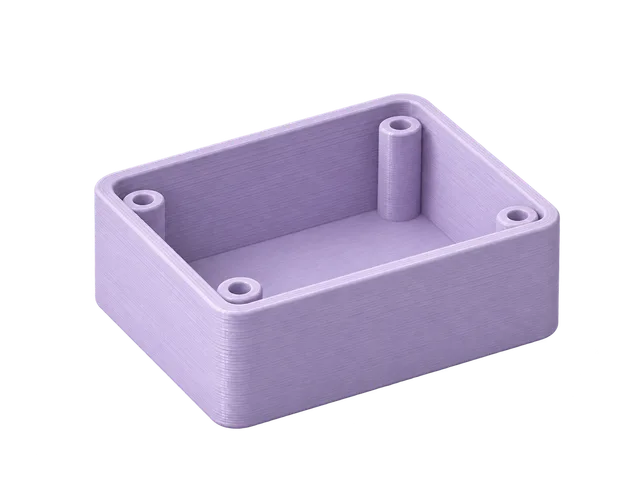
Give all three dimensions
Include length, width and height, along with the units used in the model. A single “largest size” is not enough to tell whether a shape fits a particular printable envelope. The orientation and space needed for the chosen process also matter.
Highlight any faces or edges that must stay together, as well as features that need to line up with an existing object.
Discuss the actual geometry
A thin broad panel and a deep enclosure can have very different printing considerations even when their longest dimension is the same. Explain the function, material requirements and finish priorities alongside the size.
We confirm usable size and the appropriate printing route for the project. If assembly, dividing a model or a design change is worth considering, that needs its own discussion rather than an assumed capability or included service.
Include your timing requirements
Larger-part timing depends on the confirmed model and options. Include the date you need the part and any practical delivery considerations. Our Leeds service is delivery only; collection is unavailable.
Large-format FDM: define the outer size and the interfaces.
Large-format FDM printers are available at our Leeds workshop. Send length, width and height in stated units, and identify the features that must align with something else. The usable arrangement depends on the actual model, orientation and process. If a part might need splitting, say which seams and joins would be acceptable; do not assume a published build envelope or a seamless single-piece result.
Bring your next part
into focus.