Process / FDM
Understand the layers behind the part.
FDM printing builds a shape from successive layers of extruded filament. It is one of the processes available at our Leeds workshop.
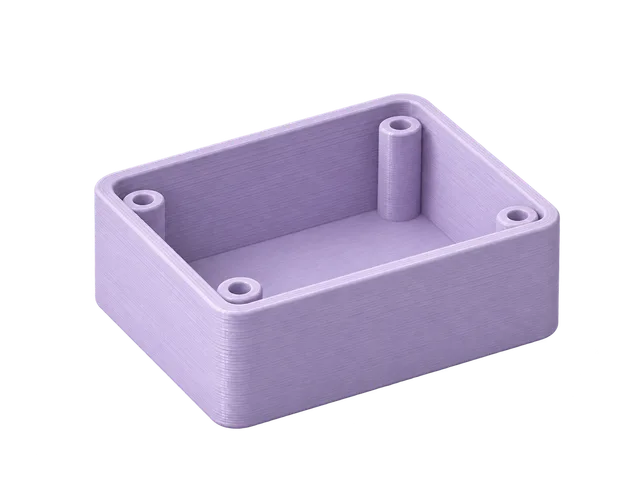
The shape and the print direction
A model needs an orientation for printing. That choice can affect where supports are needed, how surfaces appear and the relationship between the layers and the forces on a working part.
If a face must be especially clean, or a dimension relates to another component, identify it before the print is planned. Do not assume every surface will have the same finish.
Expect a printed surface
Layer lines are a characteristic of filament printing. Curves, overhangs and support-contact areas can look different from flat surfaces. Explain whether the priority is a visual model, an assembly check or a component with a practical job.
Any specific layer height, tolerance or additional finishing requirement needs agreement for the project. No single setting is suitable for every geometry.
Filament is a starting point, not a specification
PLA, PETG and other filament families describe broad material groups. The exact grade, processing and part geometry determine which properties matter for your application. Our materials guide is educational; the available order options are confirmed for your part.
FDM: include the faces that matter.
Tell us which face must mate with another component and which visible face matters most. Orientation and support contact can affect the surfaces produced by filament printing. Marking those faces makes the design discussion more specific. Prusa's modelling guidance
Bring your next part
into focus.