02 / Functional parts
A useful part starts with its working conditions.
For a part that has a job to do, the model is only part of the brief. Explain how it is held, what acts on it and the conditions around it.
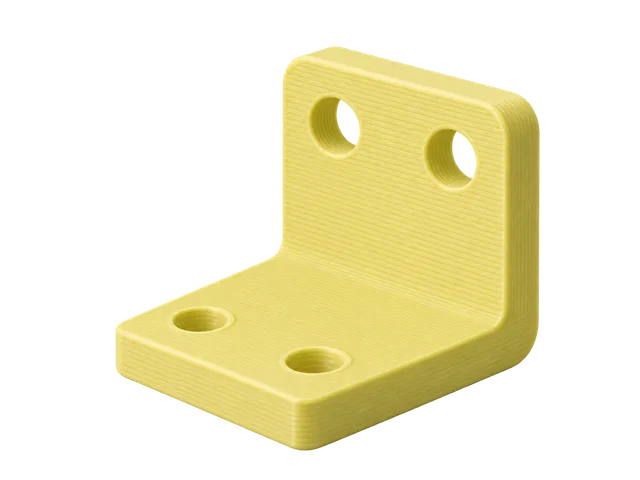
Describe the forces and the fit
A bracket, housing or spacer can look simple while its requirements are quite specific. Note the attachment points, the direction of any load and whether that load is brief, repeated or continuous. Identify the surfaces that meet other parts.
These details help frame a process and material discussion. A generic material name or a thicker wall is not a substitute for understanding the application.
Include the environment
Tell us about heat, sunlight, moisture, chemicals, movement and wear where they are relevant. The exact material grade, geometry and manufacturing conditions matter; different grades within a family can behave differently.
Printed parts have process-dependent characteristics. FDM layer orientation and resin formulation or post-processing are among the considerations. Suitability needs to be assessed for the actual job, without assuming a universal strength or temperature rating.
Useful examples, a specific enquiry
Custom housings, positioning aids, brackets and spacers are examples of practical part enquiries. They are not evidence that an illustrated part has been qualified for a particular load or regulated use.
Share the intended use and dimensions so the project can be considered on its own terms. Orders from our Leeds workshop are delivery only.
Functional parts: identify the contact and the movement.
Show where the component rests, where it is held and which surfaces move against another part. Describe the environment and intended loads. A fitted tray for desktop storage has different requirements from a device holding a working instrument in a controlled position. Neither an attractive render nor a neat fit establishes suitability for a different use.
Bring your next part
into focus.