01 / Prototype printing
Make the next revision count.
A prototype is most useful when you know what you want to learn from it. Start with the question, then shape the printing brief around the answer.
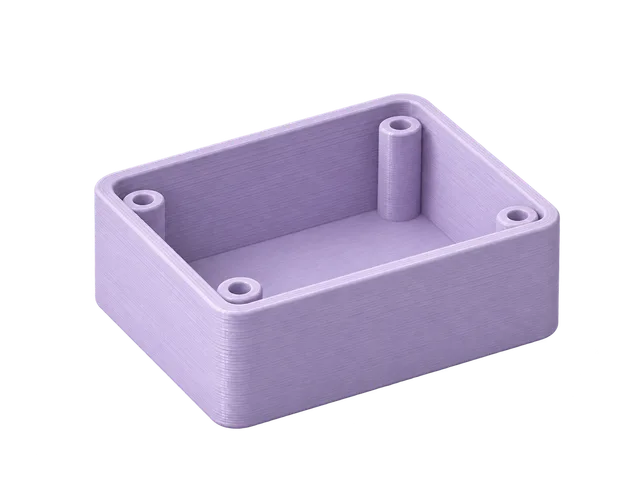
Give the prototype a job
A shape study, an assembly trial and a fit check ask different things of a printed part. You may want to judge how an enclosure feels in the hand, whether its lid clears a connector, or where two pieces need more room.
Separate the essential features from the parts that only need to represent the overall form. This helps explain where detail, dimensions and surface finish matter most.
Show what it needs to fit
Mark the dimensions that relate to another component and explain whether the fit should slide, locate or hold. Include the model revision and any drawings that clarify the relationship. A nominal dimension on its own does not describe the desired clearance.
A successful shape or fit trial does not automatically demonstrate how the final part will perform under heat, load or repeated use. Tell us whether the print is an early learning step or intended for a working application.
Plan the next step
FDM and resin offer different process and finish characteristics. We can discuss the model and available material options against the purpose of the prototype. If the geometry needs creating or changing, keep that CAD scope separate from the print enquiry.
Prototype printing: choose one fit question.
For a sliding lid, a useful early question might be whether the interface allows the intended movement and removal. Identify the mating surfaces and explain how much play is acceptable in use. A shortened interface sample could help explore that question before a full enclosure; its result would still need relating to the complete geometry and chosen process.
Bring your next part
into focus.